Conifers
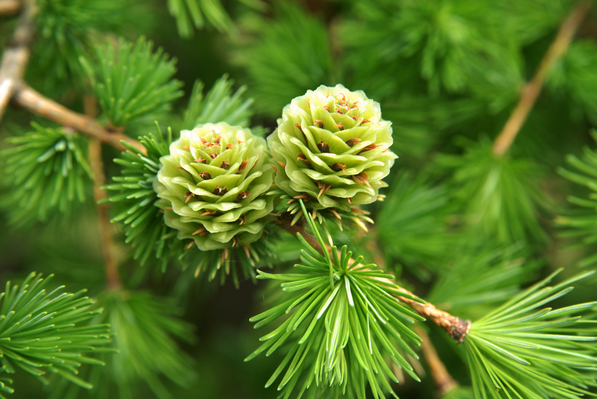
For landscaping purposes, conifers are cone-bearing, narrow-leaved or needled evergreens. They are used for a variety of purposes, such as preventing soil erosion, providing color in winter, and marking property lines. When prompted regarding conifers many homeowners may first think of conventional examples like pine and spruce trees, but in truth conifers differ widely in shape and size. There are varieties used as groundcovers and spreaders in addition to the familiar ?Christmas tree? pyramid shape. Colors range from yellowish-green to full, deep green as well as bluish-green.
Proper care for many conifers includes soil with excellent drainage. Dense soils with high clay content harbor water for extended periods, often causing rot. Standing water is also a problem for conifers. Landscapers should make sure that there are no natural waterways near conifers? intended path (they are often planted in lines as dividing markers). Also, because conifers are evergreens, many homeowners may believe they are simply hardy plants capable of surviving whatever nature throws their way. This is not the case. Conifers often have serious problems due winter drying, which results when frozen soils inhibit the plants? ability to absorb moisture at the pace at which it is lost via the plants? foliage. Soaking the area immediately around conifers in autumn can help prevent winter drying from threatening the lives of the plants. Some conifer varieties are hardier than others, as well?planting more cold-sensitive conifers in areas sheltered from winter wind and sun can also help reduce winter drying.
Spreading conifers such as emerald sea (juniperus conferta) have tremendous utility in landscaping. Their dense growth covers extraordinarily well. With careful pruning, homeowners can coax emerald sea and other spreading conifers into a myriad of shapes. In fact, spreading conifers are often the point of entry for homeowners interested in lawn sculpture. Dense growth and an extremely high level of articulated branches give landscapers thousands of individually malleable points with which to work. For homeowners and landscapers more concerned with utility, spreading conifers also work well as hedge bushes, property markers, and in flower beds. Their quick growth can easily overwhelm other plants, which makes regular pruning necessary.
Traditional conifers like fir, spruce, and pine grow well in cooler climates. They can be planted in strict rows as property markers, but some homeowners may find this method too regimented. Islands of mixed conifers can create a grove-like aesthetic, serving to shield the home from view. The sap of spruces and pines also produces a sharp, fresh scent that can dominate the area if a number are planted in close proximity. Depending on the intent of the landscaper, this may be a desirable feature.
Tags: plant, conifer, pine, spruce, winter wind, landscaping

